
Truth to Power: ‘The Dark Crystal’ and the Fight Against the Disimagination Machine
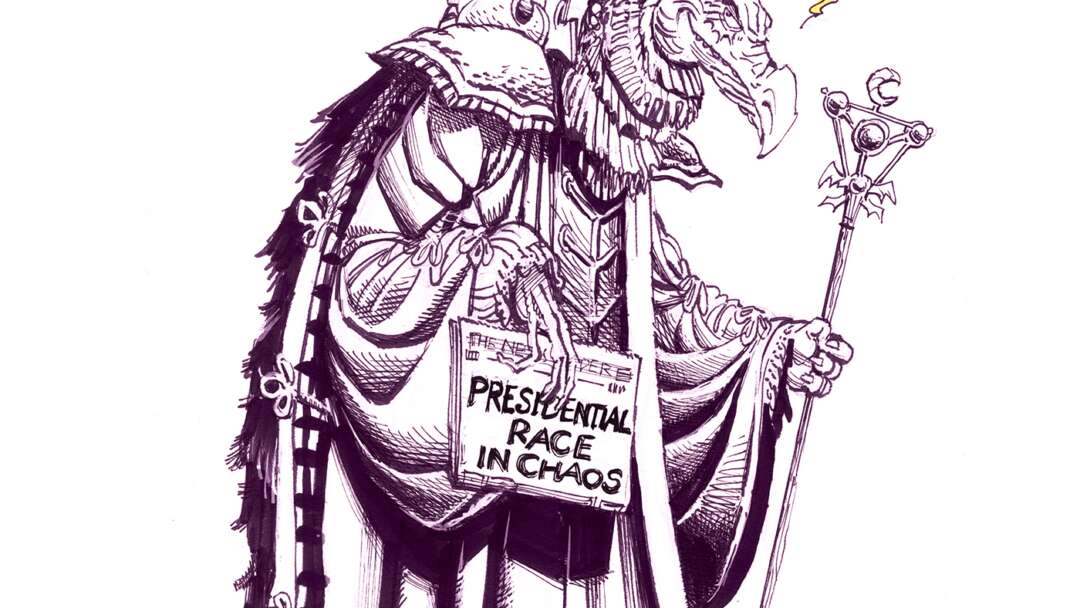
“The truth must come to light. The fires of rebellion must be lit. And a new age must begin”
–The Dark Crystal: Age of Resistance, Episode 1
In 1982, American puppeteer Jim Henson released The Dark Crystal, a fantasy film about the last two surviving members of a humanoid race called Gelfling who heal the corrupted heart of their world, the Crystal of Truth. Their restoration of the crystal shard cures the poisoned environment and reunites the antagonist rulers (Skeksis) with their peacekeeping counterparts (Mystics), symbolizing the possibility of unity in difference. The film’s final message offers hope for a moral and empathetic future in Reagan-era America, a period of conservative ideological change: “We all are part of each other. Now we leave you the Crystal of Truth. Make your world in its light” (1:27:18-30).
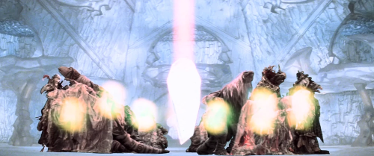
Figure 1: The Skeksis and Mystics reunite when the Crystal of Truth is healed at the end of The Dark Crystal (1982)
In 2019, three years into Donald Trump’s first presidential term, Netflix released a prequel series titled The Dark Crystal: Age of Resistance; it follows three Gelfling who lead a rebellion after learning that the Skeksis have been using the Crystal to exploit the land and drain creatures’ souls to prolong their lives. Although the Gelfling win their first battle against the Skeksis, the final scene depicting the Garthim – “soulless, fearless instruments of death” that are “engineered to be loyal” to the Skeksis (E9, 30:38-31:16) – forecasts the violent road ahead. Indeed, unbeknownst to (but seemingly anticipated by) the showrunners, 2019 was only the beginning of Trump’s America, defined by an ideology of division and misinformation, and empowered by what cultural critic Henry A. Giroux calls the disimagination machine: a far-right ideology that strives to “normalize relations of power, infantilize individuals, and reproduce oppressive ideologies masking as commonsense” (“Rethinking Education”).
While the film ‘flopped’ at the box office and was dismissed by critics as being too dark for children, the series instantly garnered critical attention for its political commentary, and even won the Emmy for Outstanding Children’s Program in 2020. With a mission to “plant [stories] into truth; keep Gelfling looking over shoulder [sic], and they won’t ever see what’s right in front of them” (E2, 8:21-32), the parallel between the MAGA agenda and the Skeksis’ self-serving and manipulative ambitions is quite uncanny. The series shows the disimagination machine in practice, as the Skeksis publicly assert that knowledge is the source of decay, and deploy creatures to infect their subjects’ minds to gain support. Their corruption (Darkening) of the Crystal unleashes the Blight, an environmental catastrophe reminiscent of oil spills and charred forest fire remains, that infects and sickens its inhabitants. Despite privately acknowledging the nightmarish effects of his “experiments upon the Darkening,” the Emperor publicly denies the reality of the Blight and drains the Crystal’s power “no matter the cost” (E9, 3:28-5:09). This recalls the deadly damage of Trump’s continued refusal to legitimate and act on the climate crisis, as he and his uber-rich friends profit from a planet ravaged by increased natural disasters and climate-related death.
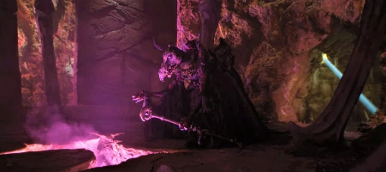
Figure 2: The Emperor secretly harnesses the Crystal of Truth’s power, accelerating the Darkening.
Perhaps most relevant today, the Skeksis’ deployment of the Garthim to ‘cleanse’ their land of a specific population is echoed by Trump’s violent and illegal assault on immigration, supported by a language of liberation and justice. Named “one of the most radical and political shows you’ll watch all year” by WIRED magazine in 2019 (Kamen), the creators of Age of Resistance recognized that timing is everything – they knew that the film’s original messaging needed to be shared more directly for a changing culture that was making Trump’s re-election a serious possibility, and, in another five years, a dangerous reality.
Over four decades ago, Jim Henson positioned truth as the very source of the planet’s life and sustenance, warning of what happens when those in power attack public consciousness and memory. Yet still, the fight against manufactured ignorance rages on at unprecedented heights, keeping The Dark Crystal politically and culturally relevant. It is therefore worth studying children’s media as an effective tool for resistance against this dangerous, fascist cultural apparatus – the interconnected systems that determine “our standards of credibility, our definitions of reality, our modes of sensibility as well as our immediate opinions and images,” as defined by C. Wright Mills. By exhuming the film’s world for a contemporary audience, marketed towards children but attracting the adult followers of the cult classic, the Henson Company demonstrates the importance of recognizing and naming the cultures that threaten public memory and consciousness, and the heightened need to combat the disimagination machine once and for all. What follows is an analysis of Age of Resistance as a metaphor for our present political moment, demonstrating the showrunners’ recognition that Trump’s first presidency was dangerously changing the culture of America, and permeating those across the globe. Living in our own age of resistance, our perilous future is outlined for us: if the cultural apparatus of misinformation is not undone worldwide, it will annihilate humanity (Giroux, Conscience 83).
Haunted Nostalgia: Children’s Media and Skeksis Culture
In their book Netflix, Dark Fantastic Genres and Intergenerational Viewing, authors Djoymi Baker, Jessica Balanzategui, and Diana Sandars trace the “haunted nostalgia” of Age of Resistance, which is associated with “childhood discomfort and fear that […] is remembered as a valuable and perhaps even a formative and treasured experience” (122). Rated TV-PG in North America (122) and tagged on Netflix as “Family Watch Together TV” (120), the show is specifically marketed towards children; having been likened to Game of Thrones, however, they note that the series walks the line “‘between playful kids’ adventure and grim adult drama’” (118). Halle Stanford, President of Television for the Jim Henson Company, said of the show: “‘I think children are very sophisticated […] Let it be a conversation starter to let [parents] talk to their children like ‘what do we do when especially little people like the Gelfling aren’t being treated well?’” (qtd in Baker et al. 132). With its dark undertones and frightening villains, the series attracts adolescent viewers who are perhaps looking for an alternative to the gentle cartoon worlds that are more commonly presented to them, reflecting the demographic of youth that are demanding societal change. Echoing this sentiment, Kylan Eoghan for Medium cites the gun violence, racial discrimination, and environmental threats that children face today, writing: “kids […] are trying to save the world despite the odds against them. They’re out there leading massive protests […] [they] get the message better than we do.” One may recall Jim Henson’s own defense of his film, saying that he “‘didn’t think it was healthy for children to always feel safe’” (qtd in Mills, “The Dark Crystal”). Children’s media that engages with the darkness of their audience’s time is therefore necessary, offering “resilience building” skills to younger viewers, while urging adults to protect the next generation from the Skeksis of the world (Baker et al. 138-139).
Significantly, both iterations of The Dark Crystal were made in moments when the disimagination machine undermined the ability of the American public to make critical choices – a socio-political culture that “normalize[s] cruelty, fetishize[s] strength, and recast[s] obedience as patriotism” (“Pedagogical Battlefield”). Addressing the political context of the ‘80s film, historian Max Boot recalls how “[Reagan] was addicted to faux facts. He would often cite apocryphal quotes and anecdotes and statistics that weren’t really true […] You can argue that acclimated the Republican party to the fire hose of falsehoods that you see from Trump” (Smith). In 2021, The Washington Post reported that Trump lied 30,573 times over his first 4 years in office, averaging 22 false claims a day at the time Age of Resistance was released (Kessler et. al). While not the one that Henry A. Giroux discuses in The Burden of Conscience, the Skeksis are indeed a “metaphor of Trump as a fascist monster” (77); as Dani Di Placido writes for Forbes, their dedication to draining the lives of the “weak” and “small” (E1, 56:33-57:19) is a visual that’s “a little too ‘Jeffrey Epstein’ for comfort.”
The Far-Right’s Fear of Truth
The political world that Age of Resistance presents, then, is blatantly adapted from fascist regimes like MAGA, “a culture of immediacy that banishes informed judgment and contemplation” (Giroux, “Pedagogical Battlefield”). The opening narration tells how the Skeksis “bewitched” Aughra (the ‘Mother Nature’ of Thra) with “stories of the universe” upon their cosmic arrival (E1, 0:00:20-0:02:34); they gifted her an orrery to explore the stars in exchange for the Crystal of Truth, a trade that put her into a coma for nearly a thousand years. The Skeksis’ deceit is then immediately established: “they gather in secret […] to steal life from the Crystal they have sworn to protect, so they may replenish themselves, cheat death, by harnessing the power of […] their prisoner: the Dark Crystal” (02:35-03:19). By extracting the Crystal of Truth from the heart of Thra and concealing it within their black palace walls, the Skeksis create a world of manufactured ignorance; the severity of their self-serving manipulation is shown through the Crystal’s titular darkening, a reflection of truth’s diminishment. In The Burden of Conscience, Giroux notes how the “unprecedented culture of misinformation and truth-denying that has become so widespread since 2016” serves to legitimate its leaders’ agenda of “unrestricted power, cruelty, [and] terror” (76). Much like how Giroux describes Florida Governor Ron DeSantis, the Skeksis have “no politics beyond the reach of [their] shadow, neither care nor imagination nor interest” (84); they say that they protect Thra but do nothing to better the livelihood of its inhabitants, presenting themselves as all-powerful out of fear of their own insignificance.
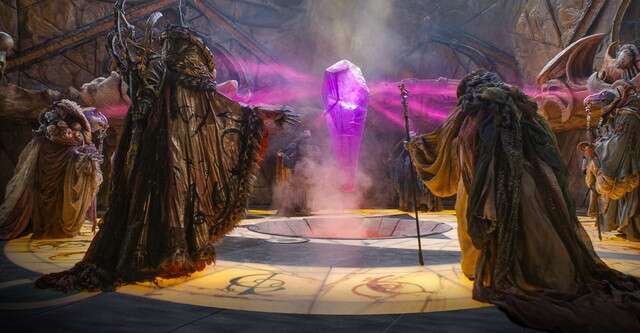
Figure 3: The Skeksis gather to “steal life” from the Crystal of Truth.
This fear is addressed by Monica Uszerowicz, who writes in BOMB Magazine:“afraid of loss, [the Skeksis] take everything. What’s darker than the systematic erasure of truth?” The Skeksis recognize that to maintain power they must appear immortal, using their cosmic origin as an unnegotiable truth. Their near-millennium rule offers convincing and stable evidence for the Gelfling, until the Skeksis’ consumption of Thra’s lifeforce is reflected in their darkened, dying land. Their fear of both political and literal impermanence is echoed by Trump’s unconstitutional 2028 presidential bid, which he has began campaigning for through $50 hats in the White House store, and by floating the idea of war – having told Ukrainian President Volodymyr Zelenskyy: “‘So let me just say, three and a half years from now […] if we happen to be in a war with somebody, no more elections? Oh, that’s good’” (qtd in Blake). Moreover, Trump has routinely conceptualized himself as divinely-appointed to convince voters of his invincibility, whether it be through AI images of him as pope, rhetoric like “I was saved by God to make America great again” (Kruse), or by proposing a $1 coin that positions his face next to the words “In God We Trust.” This “‘Biblical hero narrative,’” as rhetoric scholar Jen Mercieca puts it (qtd in Kruse), serves to excuse his imperfections, cease argumentation, and render his power unquestionable, “an imperfect figure tapped to do God’s perfect work” (Kruse). Both the Skeksis and Trump therefore engage with the idea of divinity to justify and assert the permanence of their corrupt power.
The Darkening Takes Hold: The Disimagination Machine in Practice
The citizens of Thra live in a culture of selective truths, dictated by leaders who deem certain knowledges “forbidden” (E1, 24:17-22). The Skeksis intentionally blame their disfigured features and brutish behaviour on education to dissuade Gelfling from uncovering the truths of their unwarranted claim to authority, their lies acting as shields that keep them in power (24:23-38). Significantly, the Crystal only causes bodily harm when being abused by the Skeksis; in one scene, a Skeksis named The Scientist becomes so electrified by the Darkening that he nearly dies, expressing: “the Crystal, it took hold of me, I could not stop it. I felt it draw forth my lifeforce, my very essence” (28:35-29:31). Uncoincidentally, The Scientist is the only Skeksis who is allured by the truth, urging the Emperor against draining the Crystal since “the more essence we consume the weaker the Crystal grows […] the faster the Darkening spreads!” (E4, 14:49-15:17). However, he is too cowardly to defy him, always begging for forgiveness and acting in compliance. The Skeksis’ disfigurement from the Crystal shows the power that truth has over misinformation, visualizing the self-incriminating, unconcealable effects of fascist authorities’ deceit. This is not to say that the disimagination machine is weak – as it runs through every aspect of our daily lives, poisoning our culture – but rather that it is unstable, for truth will always overpower those who attempt to conceal its light, if only we pay close enough attention. This is the show’s most hopeful message for its young viewers, who are reminded every episode about the importance of upholding truth not just as a moral principle, but, more pressingly, as a survival skill.
As it does for Trump, education for the Skeksis serves to legitimate “lying and violence as part of a broader politics designed to subvert freedom, [and] agency” (Giroux, Conscience 89). When a Gelfling named Rian attempts to expose the Skeksis for killing his friend, they claim that he was responsible and order his capture so that his “infected” mind can be cured (E2, 40:16-41:12). When Rian flees to his clan’s territory, he is seen as a “heretic,” and even his own father tries to restrain him (E3, 11:54-12:05). Here, the showrunners reproduce the ‘enemies within’ rhetoric of their Trumpian moment, which “transforms loyalty to Trump into a pledge to join a militarized army at war,” a product of having had reason replaced with “blind allegiance” (Giroux, Conscience 79). Perhaps the greatest example of this is when the Skeksis later select the “seven strongest Gelfling from each clan” to fight a make-believe war (which they later incite), using violence predicated on loyalty to cover up their genocide (E5, 10:21-11:00).
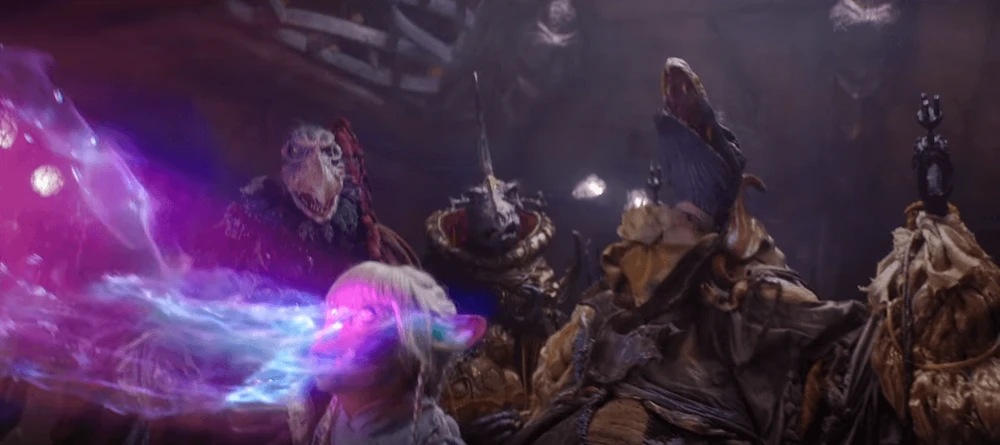
Figure 4: The Skeksis use the Crystal to drain Mira, Rian’s Gelfling friend, of her life force before killing her.
Significantly, the Skeksis’ lie of infection is used to dissuade the clans from Dreamfasting with Rian, the Gelfling way of knowledge sharing: by holding hands, they can project specific memories into another’s mind. Through this method of education, the Gelfling are positioned as truthful by nature, having a direct, physical means to combat misinformation – one which the Skeksis realize has the power to overthrow them. By outlawing Dreamfasting, Skeksis Chamberlain – who journalist Matt Kamen describes as “Dominic Cummings or Steve Bannon as a literal vulture” – concludes that “Even if Rian talk[s], no one will believe. They will shun him, cast him out,” for believing him would require the Gelfling to surrender everything they know about themselves and their world (E1, 56:33-57:19). The Skeksis understand that, in the words of Milan Kundera, “‘The first step in liquidating a people is to erase its memory’” (qtd in Giroux, “Pedagogical Battlefield”); their criminalization of Dreamfasting seeks to maintain manufactured ignorance, hoping to capture and kill Rian so that the memory of their cruelty dies with him.
This plan, however, does not work; Rian’s breakthrough comes from a Gelfling, Kylan, who is willing to Dreamfast, asserting that “the Skeksis may rule the land, but they do not rule my heart” (E4, 35:46-56). His stance suggests that being conscientious and empathetic is the first step to cleansing the mind of corruption. This morale underscores the function of the disimagination machine in our present moment, and the need for MAGA Republicans to realize that Trump should not control every aspect of their lives. This has been exemplified most recently through former MAGA-maniac Marjorie Taylor Greene’s public apology for her “toxic” rhetoric and behaviour aligned with that of Trump (qtd in Hall and Schneid); she cited his lying about the Epstein files as her wake-up call, saying: “‘I stand with these women […] I believe the country deserves transparency,’” and, “‘I really just want to see people be kind to one another.’” Embracing the Skeksis logic, Trump unsurprisingly called her a “‘traitor.’” The series shows us how Greene’s disillusionment and call-to-action can lead to resistance, as Kylan persuades two more Gelfling to Dreamfast with Rian, allowing them to realize their immediate danger and unite into a collective rebellion.
The climax of the series occurs when the truth reaches the All-Maudra, the Gelfling leader. Awakened from her ‘coma’ by the Darkening, Aughra proliferates the Dream Space to warn the All-Maudra and an assembly of other Gelfling that Rian’s findings are only the tip of the iceberg: “the clans must know the horrible truth about the Skeksis. You must light the Fires of Resistance […] Go and save our world!” (E5, 41:27-46). When the All-Maudra denounces the Skeksis for their deceitfulness, they slaughter her in front of a group of dissenters before she has a chance to expose their corruption to all the Gelfling clans. Her murder reflects what Giroux calls “the pornography of power – where culture and repression merge in a theater of fear, scripted to extinguish political imagination and render dissent illegible” (“Pedagogical Battlefield”). More than just an assassination, the All-Maudra’s death becomes a grand display of the Skeksis’ authority and lawlessness, further expressed through their promise to “drain the defiance” out of those who protect Rian (E4, 24:41-25:28). It reflects the logic that Trump uses to portray peaceful protesters against ICE raids as insurrectionists (and most recently “domestic terrorists” (Levinson-Waldman)), while rendering insurrectionists who tried to overturn the 2020 election results as peaceful protestors, pardoning those who were jailed. Public dissent is lawful only when it works in the authoritarian’s favor, to which they can sit back, relax, and enjoy the show.
The All-Maudra’s daughter, Seladon, is bewitched by this pornographic power, as she deems her dead mother a “traitor” and refuses her burial rites, claiming the Gelfling throne as her own without due process (E6, 27:52-28:20). She is a product of the disimagination machine, a MAGA Republican who is so brainwashed that she physically cannot see the truth before her. Like Marjorie Taylor Greene dressed in a ‘Trump super-fan costume’ at President Biden’s State of the Union address, Seladon adorns herself in her puppet masters’ clothing and begins to use Skeksis rhetoric, reflecting how fascist loyalty demands assimilation. She can only see the collective action of her fellow Gelfling as threatening to the few (the Skeksis) rather than “a source of strength” for the many (the Gelfling clans), demonstrating how the disimagination machine operates through individualism, collapsing social responsibility (Giroux, “Pedagogical Battlefield”). Even when the Skeksis admit their atrocities, Seladon refuses to accept the truth and continues to come to their defense, blaming the Skeksis’ reign of terror on those who began the resistance. Much to the experience of many former Trump allies, it isn’t until she’s personally attacked that she awakens to her reality.
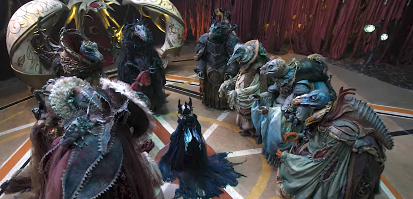
Figure 5: Seladon bows down to the Skeksis court after her mother’s murder, adorned in their clothing
Healing our Crystal of Truth
One of the most pivotal moments in the series is when the Gelfling meet the Wise Ones, a pair of Skeksis and Mystic who were outcast for demanding unity. They inform the Gelfling that their kinds arrived in Thra as one unified body before they arrogantly longed for power: “our experiments on the Crystal broke us into two. […] We tried to convince our fellow Skeksis that we must be made whole [again]; that is when they turned on us” (E7, 24:26-26:40). They instruct the Gelfling to find a blade that they forged their memories into, which “holds the power to unite the Seven Clans and defeat the Skeksis. […] Alone you are small, together you are a cleansing flame” (27:08-41). The fact that there are seven Gelfling clans is uncoincidental, on two fronts. In one essence, it reflects the internal, far-reaching divisions under one fascist regime: a multi-ethnic, complex population that is governed by the same rules, but faces the consequences on various levels. In another, the showrunners allude to how the disimagination machine not only operates in the United States but is increasingly powering administrations across the world, such as in Hungary, Italy, India, and Russia. It just might take all of humanity, united across our seven continents, to eradicate this toxic and deadly culture; but the work can (and must) begin at home.
The task before us is undoubtedly daunting, especially when reminded of Thra’s future in the original film, in which only two Gelfling remain. The Gelfling’s collective resistance ultimately fails, but that doesn’t mean humanity shares the same trajectory. In her concession speech to Donald Trump in 2024, Kamala Harris said: “‘On the campaign, I would often say, when we fight, we win. But here’s the thing […] sometimes the fight takes a while. That doesn’t mean we won’t win’” (qtd in Panetta). America challenged Trump’s MAGA regime once and they can do so again – not only by showing up at the polls this time, but by continuing to resist and unmake the culture that empowers him.
In The Dark Crystal: Age of Resistance, the collapse of truth is a violent infection that can no longer be avoided. Fascim’s “regime of terror,” as outlined by Henry A. Giroux, is entirely present in the series, as seen by the “abductions” of the Gelfling, Seladon’s “[attack] on due process,” and the Skeksis’ “assault” on education through selective knowledge keeping and sharing, as well as their “growing political culture of corruption and lawlessness” (“Pedagogical Battlefield”). In The Burden of Conscience, Giroux warns how “the plunge into a culture of irrationality fueled by Trump’s lies has […] [underscored] the necessity of recognizing that a democracy cannot exist without informed citizens” (78). As formal education is being attacked by fascist regimes worldwide, the showrunners uphold fantasy storytelling as a force for social change. Finding the missing shard of the Crystal of Truth after their battle, the Gelfling recognize it as “the key to ending Skeksis power,” which the final moments of the 1982 film prove true. By informing their multi-generational audiences that the restoration of truth is the only possibility for a safer future, both iterations of The Dark Crystal paint a path for resistance that targets culture, not just individuals. Highlighting the relevance of this message in a 2021 article titled “The Darkening, the Republican Skeksis run amok” in the Los Angeles Blade, editor Brody Levesque wrote: “The real world equivalent to the Dark Crystal are those very freedoms such as women’s reproductive rights and choices, the very existence of transgender Americans, the right of same-sex couples to adopt or have fair access to healthcare and countless other rights.” So long as these freedoms are attacked by the disimagination machine, humanity is in extreme peril.
As Giroux asserts, “to be revolutionary today means […] building new ways of being together, of listening, of imagining” (“Pedagogical Battlefield”). We must discover our own way of Dreamfasting, devising a new language that employs empathy to encourage resistance, and vindicates the memories and experiences of those who face systemic violence and injustice as truthful. As the actions of the last two Gelfling in The Dark Crystal prove, we can only overcome fascism by dismantling the culture that empowers its leaders. To rid societies of their Skeksis for good, we must dedicate ourselves to healing our own Crystal of Truth.
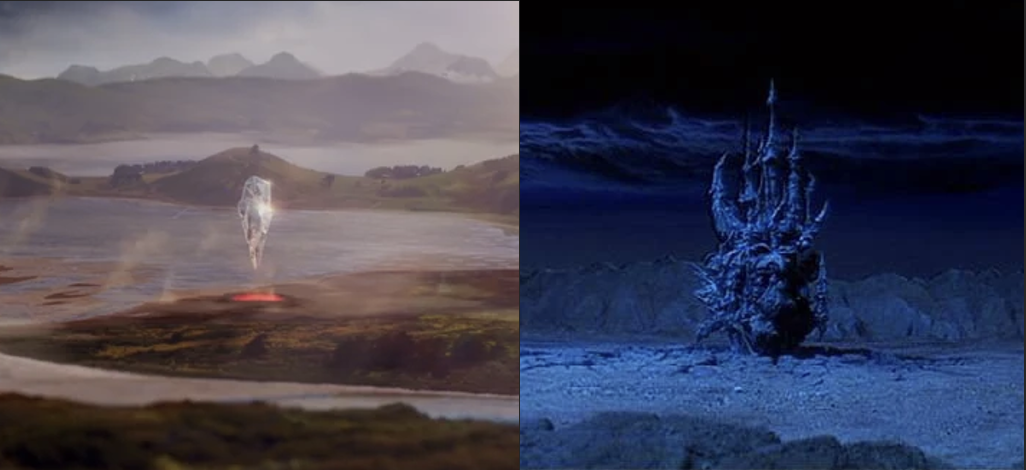
Figure 6: The Crystal of Truth is the heart of Thra; the Skeksis’ concealment and darkening of truth has catastrophic effects on the land and its people – as the barren landscape of the original film shows us. We must heed the showrunners’ warning and protect truth at all costs.
Works Cited
Addiss, Jeffrey and Will Matthews, creators. The Dark Crystal: Age of Resistance. The Jim Henson Company / Netflix, 2019.
Baker, Djoymi, et al. “The Haunted Nostalgia of The Dark Crystal: Age of Resistance.” Netflix, Dark Fantastic Genres and Intergenerational Viewing, 1st ed., Routledge, 2024, pp. 117–41, https://doi.org/10.4324/9781003223498-5.
Blake, Aaron. “Trump canceling elections? Democrats increasingly sound alarm bells.” CNN, 2 Sept. 2025, https://www.cnn.com/2025/09/02/politics/democrats-alarm-trump-elections-analysis.
Eoghan, Kylan. “‘The Dark Crystal’ An Age of Hope.” Medium, 4 Oct. 2019, https://kylaelena. medium.com/the-dark-crystal-an-age-of-hope-14f5f6aec581.
Di Placido, Dani. “The Political Commentary Of ‘The Dark Crystal: Age Of Resistance.’” Forbes, 8 Sept. 2019, https://www.forbes.com/sites/danidiplacido/2019/09/08/the-political-commentary-of-the-dark-crystal-age-of-resistance/.
Giroux, Henry A. “Culture as a Pedagogical Battlefield in the Fight Against Authoritarianism.” Socialist Project, 25 June 2025, https://socialistproject.ca/2025/06/culture-as-pedagogical-battlefield-against-authoritarianism/.
—. “Rethinking Education as the Practice of Freedom.” Counter Punch, 27 March 2023, https://www.counterpunch.org/2023/03/27/rethinking-education-as-the-practice-of-freedom/.
—. The Burden of Conscience: Educating Beyond the Veil of Silence. Bloomsbury, 2025. Hall, Richard and Rebecca Schneid. “Marjorie Taylor Greene Apologizes for Her Role in ‘Toxic Politics.’” Time, 16 Nov. 2025, https://time.com/7334322/marjorie-taylor-greene-trump-apologizes/.
Kamen, Matt. “Netflix’s The Dark Crystal: Age of Resistance is a worthy successor to Game of Thrones.” WIRED, 31 Aug. 2019, https://www.wired.com/story/dark-crystal-netflix-review/.
Kessler, Glenn, Salvador Rizzo, and Meg Kelly. “Trump’s false or misleading claims total 30,573 over 4 years.” The Washington Post, 21 Jan. 2021, https://www.washington post.com/politics/2021/01/24/trumps-false-or-misleading-claims-total-30573-over-four-years/.
Kruse, Michael. “Does Trump Actually Think He’s God?”. 30 May 2025, Politico, https://www.politico.com/news/magazine/2025/05/30/trump-god-messiah-assassination-attempt-00362322.
Levesque, Brody. “The Darkening, the Republican Skeksis run amok.” Los Angeles Blade, 24 Oct. 2021, https://www.losangelesblade.com/2021/10/24/the-darkening-the-republican-skeksis-run-amok/.
Levinson-Waldman, Rachel. “Labeling Renee Good a “Domestic Terrorist” Distorts the Law.” Brennan Center For Justice, 16 Jan. 2026, https://www.brennancenter.org/our-work/analysis-opinion/labeling-renee-good-domestic-terrorist-distorts-law.
Mills, C. Wright. “The Cultural Apparatus.” Cultural Apparatus, https://culturalapparatus. wordpress.com/culture-and-politics-the-fourth-epoch/the-cultural-apparatus/. Accessed 13 December 2025.
Mills, Matt. “The Dark Crystal at 40: inside Jim Henson’s misunderstood, dark fantasy epic.” Louder, 23 Nov. 2022, https://www.loudersound.com/features/the-dark-crystal-at-40-inside-jim-hensons-misunderstood-dark-fantasy-epic.
Panetta, Grace. “‘Don’t ever give up’: Read Kamala Harris’ full concession speech.” The 19th*, 6 Nov. 2024, https://19thnews.org/2024/11/kamala-harris-full-concession-speech/.
Smith, David. “Did Reagan pave the way for Trump? ‘You can trace the linkages,’ says biographer.” The Guardian, 21 Sept. 2024, https://www.theguardian.com/us-news/2024/sep/21/ronald-reagan-trump-comparisons-book-max-boot.
The Dark Crystal. Directed by Jim Henson and Frank Oz, Universal Pictures, 1982.
Uszerowicz, Monica. “Hope Is Fragile: The Dark Crystal: Age of Resistance Reviewed.” BOMB, 12 Sept. 2019, https://bombmagazine.org/articles/2019/09/12/a-social-parable-with-puppets-the-dark-crystal-age-of-resistance-reviewed/.
Images Cited
Thumbnail:
Yungbluth, Jason. “President Skeksis.” What Is Deepfried, 11 July 2024, https://www.whatis deepfried.com/2024/07/11/president-skeksis/, JPEG.
Figure 1:
“urRu.” The Dark Crystal Wiki, 2025, https://darkcrystal.fandom.com/wiki/UrRu, WEBP.
Figure 2:
“Darkening.” The Dark Crystal Wiki, 2021, https://darkcrystal.fandom.com/wiki/Darkening, WEBP.
Figure 3:
“The Dark Crystal: Age of Resistance (2019).” JustWatch, https://www.justwatch.com/ca/tv-show/the-dark-crystal-age-of-resistance, JFIF.
Figure 4:
“End. Begin. All the Same.” The Dark Crystal Wiki, 2024, https://darkcrystal.fandom.com/wiki/ End._Begin._All_the_Same, WEBP.
Figure 5:
Nguyen, Hanh. “‘The Dark Crystal’: Inside That Magnificent, Political Gelfling Makeover.” IndieWire, 6 Sept. 2019, https://www.indiewire.com/features/general/the-dark-crystal-gelfling-skeksis-dress-makeover-seladon-netflix-1202171513/, WEBP.
Figure 6:
“Crystal of Truth.” The Dark Crystal Wiki, 2026, https://darkcrystal.fandom.com/wiki/Crystal _of_Truth, WEBP.
“Castle of the Crystal.” The Dark Crystal Wiki, 2025, https://heroes-and-villain.fandom.com/ wiki/Castle_of_the_Crystal, WEBP.
Read more at Gavin Minard.
Articles, Public Education, ResistanceRelated News
News Listing
Alicia Petrie ➚
Incel Capitalism: Weaponized Loneliness in a Neoliberal Patriarchy
Articles, Cultural Pedagogy, Resistance

Jillian Vandervoort ➚
Generative AI: The Fabricated Solution to Life Under Late-Stage Capitalism
Articles, Education, Resistance

By Maya Phillips ➚
Failure to Reeducate: Perpetuations of Cultural Fascism in Post-War Germany
Articles, Cultural Pedagogy, Public Pedagogy