
Unknowing Victims and Lost Futures: The Neoliberal War on Play and Children
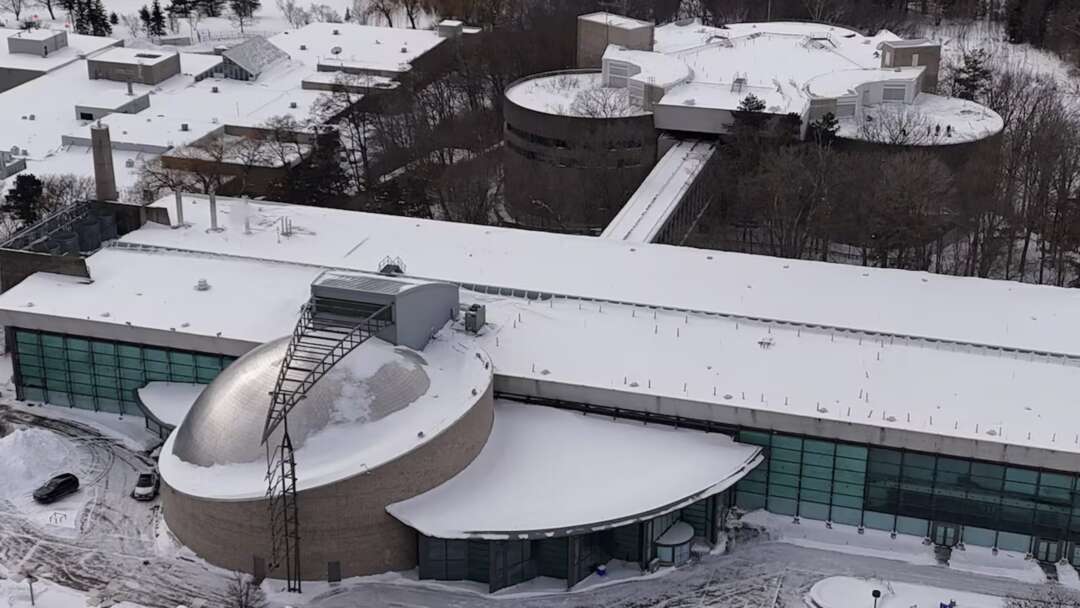
On June 21, 2024, Ontario Premier Doug Ford’s government announced the sudden and permanent shutdown of the Ontario Science Centre.[i] Claiming that an audit found the roofs of its 3 buildings were at risk of immediate collapse—which was quickly disproven upon review by other engineers—Ford called blindsided Torontonians’ demands to save the museum “foolish.”[ii] The centre, erected in Toronto’s northeast Flemingdon Park neighbourhood in 1969 as the world’s first interactive science museum,[iii] welcomed youth from all over the city and the province to its hands-on exhibits, kids park, and IMAX dome movie screenings. It housed an innovative science school for grade 12 students and daily workshops with expert craftspeople.[iv] Above all, it was a community hub for the underserviced surrounding area, of which 64% of the population are immigrants, and 35% are low income.[v] The removal of the Ontario Science Centre is not an isolated event. It is one among a pattern of attacks on children, the silent victims of neoliberalism, and their spaces—a war on play.
Children have long been understood as subjects of capitalist oppression, particularly in their experience of education.[vi] Paulo Freire described the “banking model” of education many children experience in which students are turned into entirely passive receptacles rewarded for being unquestioning.[vii] This system creates an ideal neoliberal populus who will neither be concerned with its practices, nor with the continuous squandering of their ability to inquire, to create, or to play as they grow and enter the workforce. Children become void of any critical or creative consciousness which might allow them to imagine a different world––they are merely “in the world, not with the world or others; the individual is spectator, not re-creator.”[viii] The denial of children’s access to hands-on learning extends to the intentional removal of playgrounds, which is becoming increasingly commonplace. A 2021 study by the Ontario Physical and Health Education Association found that 13% of the province’s elementary schools had no play equipment.[ix] More than half of the audited schoolyards across regions and income levels failed in their ability to provide opportunities for sports, play and environmental engagement.[x] This stark statistic raises extreme concern, particularly when it is known that unstructured active play is a “fundamental necessity for children to thrive physically, emotionally, mentally, and socially.”[xi]
The COVID-19 pandemic played a critical role in the shift toward an increasingly digital model of education.[xii] Techno-optimists urge educators to learn how to harness “all available online resources” including internet games, AI, e-learning platforms, and virtual examination software[xiii] to provide students with access to a “virtual world” which enables them to supposedly “learn more effectively.”[xiv] While technology has allowed education to make strides, the acceleration of educational e-development raises questions as to who is truly gaining from increasingly digitized learning spaces. Student performance within this new model of education is stagnant and in some cases suffering. One example of this is in the results of the most recent Ontario Education Quality and Accountability Office standardized test results, which revealed that 50% of grade 6 students and 42% of grade 9 students are not meeting provincial benchmarks in mathematics.[xv] Teachers are struggling with larger class sizes and less resources.[xvi] If not students or teachers, the current education system must be working for someone—some other stakeholder, then, must be pushing the drive toward a completely detached and digitized educational system. The 21st century has seen new formations in the ongoing corporatization of public education.[xvii] In particular, the United States’ for-profit education sector has grown massively through investments from companies like Apple, Sony, Microsoft, Oracle, and more.[xviii] Rather than directly supporting school infrastructure and resources, the American government has allowed public schools to lease out space in their buildings to companies for advertisement, such as Coca-Cola, Pepsi, and Nike.[xix] Children across North America are not only set up to be passive receptacles for curricula, but also for consumerism, and the two are increasingly becoming intertwined.
When children are deprived of their learning or play in their schools, they must turn to their community spaces. Parks, libraries, community centres, even residential streets, exist in our collective historical consciousness as filled with children; “wherever children are free to play, they do.”[xx] However, as free options for play through school and community are being demolished and the remaining ones are privatized, kids are being priced out of spaces meant for them.[xxi] Parks and recreation funding in the U.S. relies on state and municipal taxes. This funding was faced with massive cuts during the 2008 recession and later in the COVID-19 pandemic.[xxii] The loss of appeal of play spaces due to lack of investment and maintenance, alongside safety concerns have resulted in the mass movement of children to the indoors, despite research pointing to their ongoing preference for outdoor, in-community play.[xxiii]
Inside, children pass time through a variety of means, but with a loss of balance due to the lack of outdoor play, they spend significant time in the digital world. Many people refer to Gen Z as “the last generation to know life before the internet,”[xxiv] highlighting Gen Alpha’s irrevocable immersion in the Internet. Global estimates state that 1 in every 3 children is an internet user, with the mobile phone as the most popular device to access it.[xxv] Parents are encouraged to carefully but positively support their children’s use of the internet as restricting access is supposedly counterproductive.[xxvi] Social media is promoted to youth, particularly older youth, as a space for self-expression, connection, and activism.[xxvii] Increasingly, the social lives of youth are embedded in digital spheres, in fact “they often do not view their digital selves and lives as distinctly different from their offline selves/lives.”[xxviii] This muddling of identity is not the only psycho-developmental issue on the rise in the social media generation. Research by the Karolinska Institute in Sweden and the Oregon Health & Science University in the U.S. has identified that social media usage directly affects children’s ability to concentrate.[xxix] It has also been found that “the algorithmic design of social media platforms is enabling children to see negative and upsetting content [and it is delivering it] to millions of children and young people who are not seeking it out.”[xxx] As social media becomes depoliticized and commonplace and parents are discouraged from being involved in their children’s online lives, videos of assaults, wars, shootings, stabbings, and car crashes are not only accessible to children but pushed onto their feeds.[xxxi] Despite their familiarity with technology, 86% of children do not know how to reset their algorithms—allowing the continued circulation of gore, pornography, misinformation, and AI deepfakes to their “for you” pages.[xxxii]
Late 2000s and early 2010s digital children’s games have increasingly disappeared and the digital spaces for children and adults have collapsed into each other. As predatory companies’ push distressing content onto children, predatory adult users have been enabled to develop community spaces which groom and radicalize children into self-destructive and outwardly hateful behaviour. The proliferation of hashtags has allowed people to reach others interested in or curious about the same topics regardless of what corner of the internet their content is on. The hashtags #proana, #thinspo, and #fatspo belong to pro-eating disorder (ED) online communities.[xxxiii] X (formerly Twitter) is a particularly prolific site for this community as it allows for a reciprocal effect between followers and followed.[xxxiv] Dominating opinion leaders and trendsetters who create challenges like #41DaysofStarvation can exert power over other pro-ED users, particularly newcomers to the space, all while hiding behind an anonymous profile picture and alias.[xxxv] Searching “#proana” on X will provide long lists of accounts covered in pictures of characters from children’s animation shows requesting to be bullied based on their appearance (“meanspo”) or an “ana coach” who will help them achieve an extremely unhealthy goal weight. Users often list their age on their profiles, and unsurprisingly many are under 18. Connected to “edtwt” (eating disorder Twitter) is “shtwt––self-harm Twitter, a community in which people post images of their bodies cut and bleeding. In October 2021, a UK children’s digital rights charity found that tech companies were “facilitating children’s ability to connect with others celebrating self-harm” and “steering accounts with child-aged avatars searching the words ‘self-harm’ to Twitter users who were sharing photographs and videos of cutting themselves.”[xxxvi] Creatively stunted through school and lacking community in the real world, it is not surprising that children become prime victims for these spaces––spaces which extend harm beyond the screen and onto the body.
Loneliness has also has made youth vulnerable to political radicalization and hateful behavior, particularly male youth. The rise of communication technologies has facilitated a rise in far-right ideology in the United States. Platforms such as Facebook and YouTube have been known to be highly manipulable by the alt-right,[xxxvii] however the emergence of short-form content through TikTok has taken this manipulability to an extreme. A study by the University of Kent found that after only 5 days of TikTok usage, the algorithmic “for you page” presented a four-fold increase in misogynistic content.[xxxviii] ‘Manosphere’ influencers have strategically spread their content and ideology into all areas of the internet. The lack of moderation of their content can be traced to their frequent interaction and ideological alignment with high-profile politicians and businesspeople. The alt-right pipeline is not only encouraging violence against racialized people, women, and queer folk, it is seeping back into the educational sphere. The educational banking model’s assault on critical thinking, creativity, and community has directly allowed the indoctrination of young men, which is now affecting the experiences of their peers and teachers. Testimony from teachers about their experience has shown this––reports of 7th grade boys calling women and girls “holes,”[xxxix] receiving completed assignments justifying rape culture,[xl] and male students telling male staff that they would “only pay attention in classes taught by men.”[xli] In an interview with CBC, a teacher in Halifax revealed that she been told by male students to “shut up and make [them] a sandwich” and “to go get the man in charge.”[xlii] Teachers report having to walk their students off the “alt-right ledge,”[xliii] a difficult task as schools across North America are increasingly becoming the site of political battles, with books and curricula critiquing the exact ideology poisoning them—the ideas of Toni Morrison and Alice Munro among others[xliv]—being banned, paradoxically in the name of children’s protection.[xlv] Such a hostile online world is constantly expanding in capability, now not only grooming children into self-destruction and violence through traditional social media, but also AI chatbots, which people are referring to as “suicide coaches” in the aftermath of the suicides of several teenagers who turned to platforms like ChatGPT and Character.AI to discuss their mental health crises.[xlvi]
The signs are clear. What is stopping us, then, from protecting children and their spaces? The reality is that carceral capitalist states thrive off of an unquestioning and unstable youth population; polarized and self-hating, unquestioning and lacking community, a steady stream of receptacles to feed racism and misogyny, to sell pharmaceuticals and materialistic items, to stream into prisons to perform free labour. As Audre Lorde has long warned us, “without community, there is no liberation.”[xlvii] An empowered generation of youth is a threat to the functioning of white supremacy and neoliberalism. Neoliberalism directly manufactures consent about its all-encompassing processes by “eliminating an engaged critique about its most basic principles and social consequences.”[xlviii] Corporate culture has radically shifted the meaning of public culture to one of individuals defined by what they consume, not by who they are and the relationships they hold.[xlix] The need to work towards a “public good” has been eliminated.[l] Children, alongside other vulnerable groups in society, are unable to participate in the neoliberal, “every man for themselves” race. They rely on public infrastructure to develop and are thus completely left out of the world the architects of neoliberalism have created—one in which “state-led ‘social engineering’ must never prevail over corporate and private interests” and state involvement in society must be understood as directly harming individual livelihood.[li]
Neoliberal states not only carry out a war on play but also an extended, horrifically dehumanizing war on children both within its borders and around the world. Colonial states have long seen Indigenous and racialized children as threats. North American Black and Indigenous children face systematic killing at the hands of police and a state which views them as inherently criminal. ICE, in its current rampage under the Trump regime, has not only deported children, separated them from their families, but also has admitted to detaining hundreds of children for longer than the already absurd 20-day legal limit.[lii] Detained children suffered injuries and were not able to receive medical care—in one case, “medical staff told one family whose child got food poisoning to only return if the child vomited eight times.”[liii] Children around the world are also implicated in imperialistic violence. Our collective consciousness cannot shed the images of Palestinian children being directly targeted and killed by the Israeli state and military with weapons funded by and built in North America. Survivors have been stripped of their childhood—their homes, parks, and schools flattened in bombings.[liv] Trauma has reshaped children’s play, now “infused with pain and fear.”[lv] A Palestinian mother described witnessing her children “play tag by pretending to evacuate after a bombing warning, shouting, ‘Run or we’ll die.’”[lvi] Many children, losing family members, have also had to grow up extremely fast, “swap[ping] carefree play for useful tasks or caregiving responsibilities.”[lvii] The war on children is justified through the historical narrative that ‘adultifies’ racialized youth. ICE reports daily that they are arresting “the worst of worst criminal illegal aliens including pedophiles, sex abusers, and murderers”[lviii] while Benjamin Netanyahu states that “there are no innocent civilians Gaza”[lix] while directly targeting youth in their fascistic campaigns of mass deportation and genocide. Through the displacement from their humanity and childhood, imperialist states carry out the biopolitical process of “unchilding” in which they become undeserving of protection and instead “collateral damage,” pawns in the neoliberal and colonial battles of adults.[lx] The neoliberal world order authorizes the “eviction of children from childhood,”[lxi] unable to play, connect, create, and even live.
Discourse around the future of the world—in response to widespread global descension into fascism and the increasing threat of climate change—often propagates the notion that the youth will be the ones to save us. However, without a concerted focus on the oppression of children in contemporary anti-neoliberal and anti-fascist activism and politics, the generation forced to be our heroes will be completely unequipped to do so. Unable to rely on the state, we must, in our communities, consider “children a shared responsibility”[lxii] and push ourselves toward a labour of love, care, and “collective parenting.”[lxiii] We can no longer accept the war on play and children and must invest in schools and community spaces in our own communities and the world—participating in mutual aid, demanding the end of the carceral state, and protesting the participation of our governments and institutions in the arms trade. Turning a blind eye to the suffering of children is the greatest sign of societal collapse. To hold on to any hope, we must remember the words of James Baldwin: “The children are always ours, every single one of them, all over the globe.”[lxiv]
[i] Bobby Hristova and Aloysius Wong, “How Much of the Ontario Science Centre roof is at risk of collapsing? See for yourself,” CBC, June 28, 2024, https://www.cbc.ca/news/canada/toronto/ontario-science-centre-closure-explained-1.7247957.
[ii] Olivia Bowden, “Science centre closure justified by peer review: Ford government,” CBC, July 11, 2024, https://www.cbc.ca/news/canada/toronto/peer-review-ontario-science-centre-roof-disrepair-1.7260373.
[iii] The Canadian Press, “A timeline of events in the Ontario Science Centre closure,” City News, July 11, 2024, https://toronto.citynews.ca/2024/07/11/a-timeline-of-events-in-the-ontario-science-centre-closure/.
[iv] Alison Moltuk, “The Killing of the Science Centre,” The Local, November 25, 2024, https://thelocal.to/ontario-science-centre-closed/.
[v] “Flemingdon Park 2016 Neighbourhood Profile,” City of Toronto Social Policy, Analysis, & Research, 2016, https://www.toronto.ca/ext/sdfa/Neighbourhood%20Profiles/pdf/2016/pdf1/cpa44.pdf.
[vi] Paulo Freire, Pedagogy of the Oppressed (New York City: Continuum, 1962), 72.
[vii] Ibid.
[viii] Ibid., 75.
[ix] Samantha Beattie, “Ontario schoolyards ‘wasting an opportunity’ for active play and need upgrading, study says,” CBC, October 15, 2021, https://www.cbc.ca/news/canada/toronto/ontario-schoolyards-wasting-an-opportunity-for-active-play-and-need-upgrading-study-says-1.6209739.
[x] Ibid.
[xi] Rebecca A. Clay, “The many wondrous benefits of unstructured play,” American Psychological Association, September 26, 2023, https://www.apa.org/topics/children/kids-unstructured-play-benefits.
[xii] Abid Haleem et al., “Understanding the role of digital technologies in education: A review,” Sustainable Operations and Computers 3 (2022): 275, doi:10.1016/j.susoc.2022.05.004.
[xiii] Ibid., 277.
[xiv] Ibid., 281.
[xv] Joshua Freeman, “Ontario to review learning, testing after ‘insufficient progress’ in EQAO results: Calandra,” CP24, December 3, 2025, https://www.cp24.com/politics/queens-park/2025/12/03/ontario-to-review-learning-testing-after-insufficient-progress-in-eqao-results-calandra/.
[xvi] Ibid.
[xvii] Henry A. Giroux, Stealing Innocence: Corporate Culture’s War on Children (New York City: Palgrave, 2000), 85.
[xviii] Ibid., 85.
[xix] Giroux, Stealing Innocence, 94.
[xx] Peter Gray, “The Decline of Play and the Rise of Psychopathology in Children and Adolescents,” American Journal of Play 3, no. 4 (2011): 443.
[xxi] Ibid.
[xxii] Ibid.
[xxiii] Gray, “The Decline of Play,” 446.
[xxiv] Bella Nordman, “There are no online spaces for kids anymore,” The Beacon, April 23, 2025, https://berkeleybeacon.com/there-are-no-online-spaces-for-kids-anymore/.
[xxv] Sonia Livingstone et al., “Growing Up in a Connected World,” in Young People and Social Media: Contemporary Children’s Digital Culture, eds. Steve Gennaro and Blair Miller (Wilmington: Vernon Art and Science Inc., 2021), 5.
[xxvi] Ibid., 18.
[xxvii] Jennfier Laffier et al., “Youth’s Relationship With Social Media: Identity Formation Through Self-Expression and Activism,” in Young People and Social Media: Contemporary Children’s Digital Culture, eds. Steve Gennaro and Blair Miller (Wilmington: Vernon Art and Science Inc., 2021), 96.
[xxviii] Ibid., 97.
[xxix] Dan Milmo, “Social media use damages children’s ability to focus, says researchers,” The Guardian, December 8, 2025, https://www.theguardian.com/technology/2025/dec/08/social-media-damages-childrens-ability-to-focus.
[xxx] Robert Booth, “’Gruesome videos’: social media pushes distressing news to children, experts say,” The Guardian, October 16, 2025,
[xxxi] Ibid.
[xxxii] Ibid.
[xxxiii] Suku Sukunesan et al., “Examining the Pro-Eating Disorders Community on Twitter Via the Hashtag #proana: Statistical Modeling Approach,” JMIR Mental Health 8, no. 7 (2021), 1, doi: 10.2196/24340.
[xxxiv] Ibid., 6.
[xxxv] Ibid.
[xxxvi] Alex Goldenberg et al., “Online Communities of Adolescents and Young Adults Celebrating, Glorifying, and Encouraging Self-Harm and Suicide are Growing Rapidly on Twitter,” Network Contagion Research Institute, August 2022, 7.
[xxxvii] Ibid., 101.
[xxxviii] Kaitlyn Regehr et al., “Safer Scrolling: How algorithms popularise and gamify online hate and misogyny for young people,” University of Kent, February 2, 2024, 5, https://www.ascl.org.uk/ASCL/media/ASCL/Help%20and%20advice/Inclusion/Safer-scrolling.pdf.
[xxxix] Emelia L. Sandau and Luc S. Cousineau, “’Trying to talk white male teenagers off the alt-right ledge’ and other impacts of masculinist influences on teachers,” Gender and Education 37, no. 5 (2025), 602, doi:10.1080/09540253.2025.2515863.
[xl] Ibid.
[xli] Ibid., 601.
[xlii] Olivia Piercey, “Online misogyny seeping into classrooms in ‘frightening’ ways, teachers and experts say,” CBC, July 20, 2025, https://www.cbc.ca/news/canada/nova-scotia/misogyny-online-influencers-boys-classrooms-1.7587571.
[xliii] Sandau and Cousineau, “Trying to talk,” 605.
[xliv] Joyce VanTassel-Baska, “The Curriculum Policy of Book Banning in Schools,” Gifted Child Today 47, no. 4 (2024), 303, doi.org/10.1177/10762175241264042.
[xlv] Katy Waldman, “What are we protecting children from by banning books?” The New Yorker, March 10, 2023, https://www.newyorker.com/books/page-turner/what-are-we-protecting-children-from-by-banning-books.
[xlvi] Rhitu Chatterjee, “Their teenage sons died by suicide. Now they are sounding an alarm about AI chatbots,” NPR, September 19, 2025, https://www.npr.org/sections/shots-health-news/2025/09/19/nx-s1-5545749/ai-chatbots-safety-openai-meta-characterai-teens-suicide.
[xlvii] Audre Lorde, “The Master’s Tools Will Never Dismantle the Master’s House,” in Sister Outsider: Essays and Speeches (Trumansburg, NY: Crossing Press, 1984), 107.
[xlviii] Giroux, The Abandoned Generation, 158.
[xlix] Ibid., 159.
[l] Ibid.
[li] Stuart Hall, “The neoliberal revolution,” Soundings 48, no. 48 (2011), 10, doi:10.3898/136266211797146828.
[lii] Valerie Gonzalez, “About 400 immigrant children were detained longer than the recommended limit, ICE admits,” ABC News, December 9, 2025, https://abcnews.go.com/US/wireStory/400-immigrant-children-detained-longer-recommended-limit-ice-128248825.
[liii] Ibid.
[liv] Dana Bdier et al., “From laughter to survival: The effect of war on children’s play in Gaza,” Children and Youth Services Review 178 (2025), 5, doi:10.1016/j.childyouth.2025.108526.
[lv] Ibid., 3.
[lvi] Ibid.
[lvii] Ibid., 5.
[lviii] “ICE Arrests Worst of Worst Criminal Illegal Aliens Including Pedophiles, Sex abusers, and Murderers,” Department of Homeland Security, December 12, 2025, https://www.dhs.gov/news/2025/12/12/ice-arrests-worst-worst-criminal-illegal-aliens-including-pedophiles-sex-abusers.
[lix] David Ingram, “Israeli government sparks outcry with X videos saying ‘there are no innocent civilians’ in Gaza,” NBC News, June 14, 2024, https://www.nbcnews.com/tech/social-media/israel-posts-video-saying-are-no-innocent-civilians-gaza-rcna157111.
[lx] Nadera Shalhoub-Kevorkian, Incarcerated Childhood and the Politics of Unchilding (New York: Cambridge University Press, 2019), 128.
[lxi] Ibid., 124.
[lxii] Hall, “The neoliberal revolution,” 24.
[lxiii] bell hooks, Feminist Theory: From Margin to Center (New York: Routledge, 2014), 147.
[lxiv] James Baldwin, “Notes on the House of Bondage,” The Nation, November 1, 1980, https://www.thenation.com/article/archive/notes-house-bondage/.
Bibliography
Baldwin, James. “Notes on the House of Bondage.” The Nation. November 1, 1980. https://www.thenation.com/article/archive/notes-house-bondage/.
Bdier, Dana, Bilal Hamamra, and Fayez Mahamid. “From laughter to survival: The effect of war on children’s play in Gaza.” Children and Youth Services Review 178 (2025): 1–6. doi:10.1016/j.childyouth.2025.108526
Beattie, Samantha. “Ontario schoolyards ‘wasting an opportunity’ for active play and need upgrading, study says.” CBC. October 15, 2021. https://www.cbc.ca/news/canada/toronto/ontario-schoolyards-wasting-an-opportunity-for-active-play-and-need-upgrading-study-says-1.6209739.
Bowden, Olivia. “Science centre closure justified by peer review: Ford government.” CBC. July 11, 2024. https://www.cbc.ca/news/canada/toronto/peer-review-ontario-science-centre-roof-disrepair-1.7260373.
Booth, Robert. “’Gruesome videos’: social media pushes distressing news to children, experts say.” The Guardian. October 16, 2025. https://www.theguardian.com/society/2025/oct/16/gruesome-videos-social-media-distressing-news-children-survey.
Chatterjee, Rhitu. “Their teenage sons died by suicide. Now they are sounding an alarm about AI chatbots.” NPR, September 19, 2025. https://www.npr.org/sections/shots-health-news/2025/09/19/nx-s1-5545749/ai-chatbots-safety-openai-meta-characterai-teens-suicide.
Clay, Rebecca A. “The many wondrous benefits of unstructured play.” American Psychological Association. September 26, 2023. https://www.apa.org/topics/children/kids-unstructured-play-benefits.
Dickinson, Robert and Tom Cowin. “The kids are alt-rigt: an introduction to PragerU and its role in radicalization in the United States.” Patterns of Prejudice 56, nos. 2-3 (2022): 95–122. doi:10.1080/0031322X.2023.2219167.
“Flemingdon Park 2016 Neighbourhood Profile.” City of Toronto Social Policy, Analysis, & Research. 2016. https://www.toronto.ca/ext/sdfa/Neighbourhood%20Profiles/pdf/2016/pdf1/cpa44.pdf.
Freeman, Joshua. “Ontario to review learning, testing after ‘insufficient progress’ in EQAO results: Calandra.” CP24. December 3, 2025. https://www.cp24.com/politics/queens-park/2025/12/03/ontario-to-review-learning-testing-after-insufficient-progress-in-eqao-results-calandra/.
Freire, Paulo. Pedagogy of the Oppressed. New York City: Continuum, 1962.
Hall, Stuart. “The neoliberal revolution.” Soundings 48, no. 48 (2011): 9–28. doi:10.3898/136266211797146828.
hooks, bell. Feminist Theory: From Margin to Center. New York: Routledge, 2014.
Giroux, Henry A. Stealing Innocence: Corporate Culture’s War on Children. New York City: Palgrave, 2000.
––––––. The Abandoned Generation: Democracy Beyond the Culture of Fear. New York City: Palgrave, 2003.
Goldenberg, Alex, John Farmer, Lee Jussim, et al. “Online Communities of Adolescents and Young Adults Celebrating, Glorifying, and Encouraging Self-Harm and Suicide are Growing Rapidly on Twitter.” Network Contagion Research Institute (2022): 1–18.
Gonzalez, Valerie. “About 400 immigrant children were detained longer than the recommended limit, ICE admits.” ABC News. December 9, 2025. https://abcnews.go.com/US/wireStory/400-immigrant-children-detained-longer-recommended-limit-ice-128248825.
Gray, Peter. “The Decline of Play and the Rise of Psychopathology in Children and Adolescents.” American Journal of Play 3, no. 4 (2011): 443–463.
Haleem, Abid, Mohd Javaid, Mohd Asim Qadri, and Rajiv Suman. “Understanding the Role of Digital Technologies in Education: A Review.” Sustainable Operations and Computers 3 (2022): 275–85. doi:10.1016/j.susoc.2022.05.004.
Hristova, Bobby and Aloysius Wong. “How Much of the Ontario Science Centre roof is at risk of collapsing? See for yourself.” CBC. June 28, 2024, https://www.cbc.ca/news/canada/toronto/ontario-science-centre-closure-explained-1.7247957.
“ICE Arrests Worst of Worst Criminal Illegal Aliens Including Pedophiles, Sex abusers, and Murderers.” Department of Homeland Security. December 12, 2025. https://www.dhs.gov/news/2025/12/12/ice-arrests-worst-worst-criminal-illegal-aliens-including-pedophiles-sex-abusers.
Ingram, David. “Israeli government sparks outcry with X videos saying ‘there are no innocent civilians’ in Gaza.” NBC News. June 14, 2024. https://www.nbcnews.com/tech/social-media/israel-posts-video-saying-are-no-innocent-civilians-gaza-rcna157111.
Laffier, Jennifer, Molly Gadanidis, and Janette Hughes. “Youth’s Relationship With Social Media: Identity Formation Through Self-Expression and Activism.” In Young People and Social Media: Contemporary Children’s Digital Culture, edited by Steve Gennaro and Blair Miller, 91–109. Wilmington: Vernon Art and Science Inc., 2021.
Livingstone, Sonia, Marium Saeed, and Daniel K. Winther. “Growing Up in a Connected World.” In Young People and Social Media: Contemporary Children’s Digital Culture, edited by Steve Gennaro and Blair Miller, 1–23. Wilmington: Vernon Art and Science Inc., 2021.
Lorde, Audre. “The Master’s Tools Will Never Dismantle the Master’s House.” In Sister Outsider: Essays and Speeches, 106–109. Trumansburg: Crossing Press, 1984.
Milmo, Dan. “Social media use damages children’s ability to focus, says researchers.” The Guardian. December 8, 2025. https://www.theguardian.com/technology/2025/dec/08/social-media-damages-childrens-ability-to-focus.
Moltuk, Alison. “The Killing of the Science Centre.” The Local. November 25, 2024, https://thelocal.to/ontario-science-centre-closed/.
Nordman, Bella. “There are no online spaces for kids anymore.” The Beacon. April 23, 2025. https://berkeleybeacon.com/there-are-no-online-spaces-for-kids-anymore/.
Piercey, Olivia. “Online misogyny seeping into classrooms in ‘frightening’ ways, teachers and experts say.” CBC. July 20, 2025. https://www.cbc.ca/news/canada/nova-scotia/misogyny-online-influencers-boys-classrooms-1.7587571.
Regehr, Kaitlyn, Caitlin Shaughnessy, Minzhu Zhao, and Nicola Shaughnessy. “Safer Scrolling: How algorithms popularise and gamify online hate and misogyny for young people.” University of Kent. February 2, 2024. https://www.ascl.org.uk/ASCL/media/ASCL/Help%20and%20advice/Inclusion/Safer-scrolling.pdf.
Sandau, Emilia L. and Luc S. Cousineau. “’Trying to talk white male teenagers off the alt-right ledge’ and other impacts of masculinist influences on teachers.” Gender and Education 37, no. 5, (2025): 595–610. doi:10.1080/09540253.2025.2515863.
Shalhoub-Kevorkian, Nadera. Incarcerated Childhood and the Politics of Unchilding. New York: Cambridge University Press, 2019.
Sukunesan, Suku, Minh Huynh, and Gemma Sharp. “Examining the Pro-Eating Disorders Community on Twitter Via the Hashtag #proana: Statistical Modeling Approach.” JMIR Mental Health 8, no. 7 (2021): 1–9. doi:10.2196/24340.
The Canadian Press. “A timeline of events in the Ontario Science Centre closure.” City News. July 11, 2024. https://toronto.citynews.ca/2024/07/11/a-timeline-of-events-in-the-ontario-science-centre-closure/.
VanTassel-Baska, Joyce. “The Curriculum Policy of Book Banning in Schools.” Gifted Child Today 47, no. 4 (2024): 302–305. doi:10.1177/10762175241264042.
Waldman, Katy. “What are we protecting children from by banning books?” The New Yorker. March 10, 2023. https://www.newyorker.com/books/page-turner/what-are-we-protecting-children-from-by-banning-books.
Read more at Aliana Nezova.
Articles, Public Education, Public PedagogyRelated News
News Listing

Sophia Shelley ➚
The Fascist Awakens: Addressing Fascist Aesthetics and Fandom Reactions in Andor
Articles, Public Pedagogy, Resistance

Alicia Petrie ➚
Incel Capitalism: Weaponized Loneliness in a Neoliberal Patriarchy
Articles, Cultural Pedagogy, Resistance
Gavin Minard ➚
Truth to Power: ‘The Dark Crystal’ and the Fight Against the Disimagination Machine
Articles, Public Education, Resistance